
Metal Roofing Services in Hillsborough County, FL
Local Roofing Contractor Expertise
Serving Hillsborough County, we specialize in metal roofing installation, roof replacement, and standing seam metal roofing for homes across Tampa's diverse neighborhoods—from historic Seminole Heights to suburban Brandon and beyond. Metal roofs stand up to Florida's heat, humidity, and hurricane winds better than traditional asphalt shingles, protecting your investment for 40+ years. This page covers what roofing contractor services in Hillsborough County involve, why metal roofing makes sense here, and how we handle permits and local building codes.
How Metal Roofing Works
Understanding the basics helps you make the right choice for your Hillsborough County home.
Standing Seam Metal Roofing
Standing seam panels interlock along raised ribs with hidden fasteners, creating a tight seal against wind and water. In areas like Valrico and Westchase with stricter HOA guidelines, the clean lines appeal to neighborhood aesthetics while meeting high-wind requirements for Florida's storm-prone climate.
Metal Roof Accessories & Flashing
Proper flashing around penetrations, ridge caps, and gutters prevents leaks and protects your roof deck. In high-humidity Tampa Bay, ventilation and secondary water barriers keep attics dry year-round.
Energy Efficiency & Cooling Savings
Reflective metal coatings bounce solar heat away, reducing attic temperatures and air-conditioning demand. Homeowners report 10–25% cooling cost savings, significant when your AC runs eight months a year across Hillsborough County.
Installation & Process Overview
Metal roofing installation follows Florida Building Code and Hillsborough County permit standards.
Permits & Planning
Your contractor files permits with Hillsborough County Development Services. Residential review takes 10–15 business days. All work must comply with Florida Building Code wind-load and secondary water barrier rules.
Tear-Off & Inspection
Old roofing is removed and disposed of. Your deck is inspected for rot or damage. Any compromised boards are replaced to ensure a solid foundation for the new metal system.
Underlayment & Base Prep
A peel-and-stick secondary water barrier is applied across the entire deck per Florida code. This protects your home if high winds remove the primary metal panels.
Panel Installation
Standing seam panels are laid and fastened per manufacturer specs and Florida code. Flashing, vents, ridge caps, and gutters are installed. All fasteners are precisely placed to resist wind uplift.
Final Inspection & Permit Closeout
County inspector verifies all work meets FBC and local code. Once approved and fees are paid, your permit is closed and your roof is legally protected.
Proper installation is everything—one mistake voids warranties and invites leaks.
Why Metal Roofing Matters in Hillsborough County
Florida's climate and Hillsborough County's building codes drive roofing choices.
Hurricane & High-Wind Resistance
Hillsborough County sits in a wind-borne debris region. Standing seam metal roofs rated for 140+ mph winds resist the forces that tear asphalt shingles away. Concealed fasteners mean no exposed fastener heads for wind to exploit.
Durability in Tropical Heat & Humidity
Asphalt shingles in Tampa Bay typically fail after 15–20 years. UV exposure, thermal cycling, and salt spray from the Gulf accelerate deterioration. Quality metal roofs last 40–70 years with proper installation, saving you from repeated replacements.
Algae & Salt Spray: Metal doesn't harbor algae like asphalt. Salt air from Tampa Bay corrodes traditional flashing faster than metal systems with protective coatings.
Insurance & Resale Value
Many insurers offer discounts for metal roofs because they reduce storm claims. When you sell, metal roofs appeal to buyers across Plant City, Brandon, and historic neighborhoods near downtown Tampa who want confidence their roof will withstand the next hurricane season.
Local Expertise & Coverage Area
We know Hillsborough County's neighborhoods, HOAs, and permitting nuances.
Hillsborough County Neighborhoods
From historic Tampa neighborhoods like Seminole Heights and Hyde Park with 1960s ranch homes to modern subdivisions in Brandon, Valrico, and Westchase, we understand each area's architectural styles and HOA guidelines. Temple Terrace, Plant City, and Town 'n' Country all have unique permitting and material approval rules we navigate daily.
- Downtown Tampa & South Tampa (Bayshore, Davis Islands)
- Brandon (suburban I-75 corridor)
- Valrico & Westchase (affluent residential)
- Plant City (east county, agricultural heritage)
- Temple Terrace & Town 'n' Country (mixed residential)
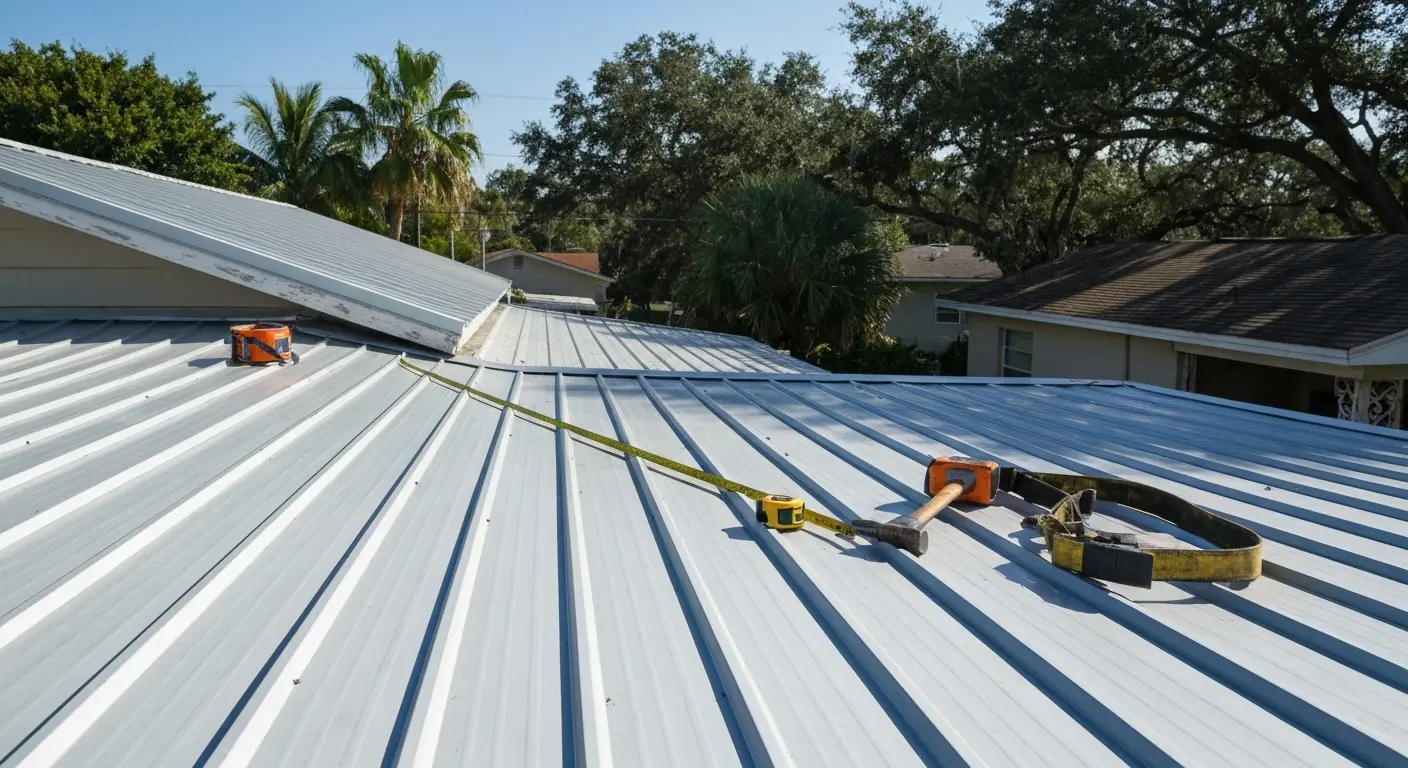
Metal roof installation across Hillsborough County neighborhoods
Florida Building Code & Permits
Hillsborough County enforces the Florida Building Code with strict wind-load and secondary water barrier requirements. The '25% Rule' means if more than 25% of your roof section is repaired within 12 months, the entire section must meet current code. We handle all permits through HillsGovHub to ensure compliance and protect your insurance coverage.
What Homeowners Ask Most
Common questions about metal roofing in Hillsborough County.
Does metal roofing work with every home style in Hillsborough County?
Yes. Metal comes in standing seam (modern), shingle-style panels (traditional), and profiles that mimic tile or slate. Historic homes in Seminole Heights and Mediterranean-style homes in South Tampa can all benefit from metal with the right profile and color.
Will my HOA approve metal roofing?
Many do, but some communities (especially Valrico and Westchase) have strict material rules. Always check your covenants first and submit samples for approval before installation begins.
How much does metal roofing cost compared to asphalt shingles?
Metal costs 2–3 times more upfront. But over a 40–70 year lifespan, the per-year cost is lower. Add 10–25% cooling savings and lower insurance rates, and the economics favor metal for homeowners staying long-term.
Is metal roofing really quiet in heavy rain?
Properly installed metal with underlayment is no noisier than asphalt shingles. Poor installation or thin underlayment can create noise, so contractor expertise matters.
Do I need a new roof after a hurricane or storm?
Depends on damage. We provide detailed inspections and work directly with your insurance company. If repairs exceed 25% of a section, Florida code requires upgrading the entire section to current standards.
What happens if a contractor cuts corners on installation?
Poorly installed metal can leak, rust, and fail under stress. Always verify your contractor has metal roofing certifications, references, and Florida licensing. Cheap installation often costs more in the long run.
DISCOVER WHAT OUR CUSTOMERS HAVE TO SAY ABOUT US
REVIEWS
proudly serving these areas
Citrus County, FL
Clearwater, FL
Dade City, FL
Dunedin, FL
Hillsborough County, FL
Inverness, FL
Key West, FL
Largo, FL
READY TO take the next step?
get a free quote TODAY!
QUICK LINKS
our services
service areas
operating HOURS
Mon: 9:00 am - 5:00 pm
Tue: 9:00 am - 5:00 pm
Wed: 9:00 am - 5:00 pm
Thu: 9:00 am - 5:00 pm
Fri: 9:00 am - 5:00 pm
Sat: Closed - Closed
Sun: Closed - Closed